
Business Maritime
THE 84-NAUTICAL-MILE GRAVEYARD: How Silt, Suits, and Spent Billions Buried the Calabar Port

BY EGUONO ODJEGBA
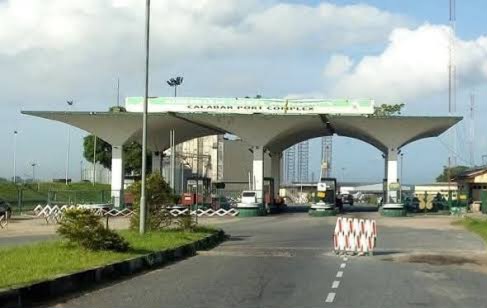
While chronic gridlock and operational congestion paralyze the quays of Lagos, 600 kilometers to the east lies a quiet maritime tragedy. The Calabar Port, Nigeria’s oldest international gateway remains largely stranded in shallow waters.
At the centre of this decades-long stagnation is the infamous Calabar Port Channel. Spanning 84 nautical miles (155 kilometers) from the Fairway Buoy to the port complex, the channel suffers from an unrelenting annual siltation rate exceeding 30 percent. For nearly 30 years, attempts to scoop out this silt to allow modern, deep-draught vessels to dock have devolved into a cycle of failed contracts, administrative audits, and endless legal warfare.
In this report, Eguono Odjegba takes a comprehensive look at the cobwebs of convoluted journey of the port that first put Nigeria’s name in global shipping map.
A Timeline of Sunk Capital
A look into official procurement records reveals that successive federal administrations have poured tens of billions of naira into the waterway—with almost nothing to show for it on the hydrographic charts.
+—————————————————————————————————————-+
| Era / Year | Contract Value | Primary Contractors | Target Draught | Status
+——————————————————————————————————————+
| 1996 | ₦3.0 Billion | CCECC / Minor Chinese Firms | Undefined | Abandoned | 2006 | $56.0 Million | Van Oord & Jan De Nul | 8.0 Meters | Partial/Re-silted | 2014 | ₦20.0 Billion | Calabar Channel Management JV | 9.8 Meters | Litigated/Halted +——————————————————————————————————————-+
The 1996 Abacha Contract
The saga began under General Sani Abacha’s military regime with a ₦3 billion allocation awarded to a Chinese consortium. Works were minimal, execution collapsed almost immediately, and seasonal river currents quickly refilled whatever sand had been excavated.
The 2006 $56 Million Capital Dredging
President Olusegun Obasanjo’s administration launched a major capital dredging initiative valued at $56 million (₦8.9 billion at the time). The mandate was split between two Dutch maritime engineering giants:
Van Oord: Received $26 million to handle the first 44 kilometers.
Jan De Nul: Received $30 million for the remaining 40 kilometers.
The target was to scoop out 25 million cubic meters of soil to secure an 8.0-meter draught. Both contractors mobilized in late 2006 and demobilized 64 weeks later after reportedly, extracting the specified 25 million cubic meters. It must be emphasized however, that according to insiders, the initial surveys had severely underestimated total silt volumes. Over 12 nautical miles were left completely untouched and un-buoyed.
Without navigating buoys and continuous maintenance, the river’s heavy sediment flow filled the dredged sections within months, rendering the $56 million expenditure, unproductive and useless.
The 2014 Joint Venture Breakdown
In November 2014, President Goodluck Jonathan’s administration introduced a ₦20 billion Joint Venture (JV) framework for the Calabar Channel Management (CCM), and a 60/40 public-private partnership with the Nigerian Ports Authority (NPA) meant to achieve a 9.8-meter depth.
The arrangement broke down shortly after. Forensic audits by subsequent NPA leadership raised red flags over procurement process compliance, alleged payment disbursements without verified hydrographic completion certificates, and non-performance. The NPA abruptly cancelled the JV in 2017. The private consortium, Niger Global Engineering and Technical Company Limited, responded with fierce counter-litigation, securing court injunctions that effectively barred the Federal Government from re-tendering the channel to any third-party contractor.
For years, the channel remained subjudice, leaving the NPA legally paralyzed while the waterway silted down to a restrictive 5.4-to-6.4 meters.
The Interim Fix: Flat-Bottom Vessels
Faced with a complete legal roadblock and an estimated ₦50 billion+ price tag required for fresh capital dredging, maritime authorities and logistics operators pivoted to an operational workaround: Flat-Bottom Vessels (FBVs).
Unlike standard ocean-going ships with deep, V-shaped hulls that require 9 to 13 meters of water depth, FBVs feature a wider beam and a flattened base. This spreads the cargo’s displacement horizontally rather than vertically.
+——————————————————————————————————————-+
| Vessel Type | Required Draught | Payload Capacity | Calabar Feasibility |
+——————————————————————————————————————-+
| Standard Bulk/ULCS | 9.5m – 13.5m+ | High (Container) | Unviable (Grounds) |
| Flat-Bottom Carrier | 5.5m – 6.4m | 60,000 MT (Bulk) | Operational Today |
+——————————————————————————————————————-+
The concept was proven in late 2017 when the MV Desert Ranger, a 200-meter flat-bottom vessel carrying 60,000 metric tonnes of wheat successfully navigated the shallow channel and berthed at Calabar Port.
Economic Reality: Workaround vs. Permanent Solution
While FBVs have kept the port from total shutdown, maritime economists warn that they are a temporary bridge rather than a lasting solution.
The CapEx vs. Freight Rate Trade-Off: Relying on FBVs saves the government from immediate dredging expenditure. However, specialized flat-bottom chartering commands higher premium freight rates, adding significant voyage surcharges for regional importers.
The Bulk vs. Container Divide: FBVs work for heavy bulk commodities like wheat, cocoa, and cement. They fail to solve the containerized cargo crisis. Major international shipping lines (operating standardized deep-draught container ships) refuse to call at Calabar, forcing Eastern merchants to continue shipping containerized goods through Lagos or Onne before paying massive inland road haulage costs.
Emerging Uncomfortable Political Dimension
While it is instructive to note that President Bola Ahmed Tinubu upon assumption of office, took steps to recreate and refocus the port industry, it is believed that the prevailing imbalance in cargo distribution have thrown spanners in the expected comprehensive scope of development envisaged by him.
Earlier this week during a meeting with the Director General of the Maritime Administration and Safety Agency (NIMASA), Dr. Dayo Mobereola in Aso Rock, President Tinubu reaffirmed his administration’s commitment to the continuous development of Nigeria’s maritime industry. He noted that the creation of the Ministry of Marine and Blue Economy was a deliberate step towards ensuring that the maritime sector contributes more significantly to the nation’s Gross Domestic Product (GDP).
In spite of the president’s passion to unlock the industry’s optimal capacities and full potentials, it is unclear how far his appointees can go in driving the necessary change, especially in relation to the concerning level of cargo distribution dichotomy which has to some extent assumed a political colouration.
It will be recalled that the Lagos State Governor, Babajide Sanwo-Olu, not too long ago, engaged in an open, public disagreement with the management of the Nigerian Ports Authority (NPA), indeed, in open quarrel with the Authority over its work plans to make the Delta Port more functional and productive.
With this sort of characters surrounding the president, any optimism regarding the sincere recalibration of the Calabar port for a more efficient service turnaround can only be one of sheer, immense faith and unshakeable conviction.
The Path Ahead
Recent efforts by the Federal Ministry of Transportation (Federal Ministry of Marine and Blue Economy), the Ministry of Justice, and the NPA have focused on out-of-court settlements to vacate the lingering injunctions, verify historical claims, and exit the flawed 2014 JV cleanly.
Until those legal constraints are cleared and a permanent, high-volume maintenance dredging structure is established, Calabar Port will remain caught between its rich historical past as an international hub and the shallow reality of its present waterway.
Overall and in terms of operational efficiency, it is believed that Calabar port offers a more realistic Stochastic Frontier Analysis (SFA) rate the Apapa (Lagos) seaport efficiency near top capacity at 0.98 (98%), compared to Calabar Port’s mean efficiency of 0.61 (61%), indicating substantial underutilization of the Calabar port.






Again, Customs FOU Zone ‘A’ Rescues Five Live Pangolins in Ogun State

Lagos-Calabar Highway: When a Presidential Legacy Project Collides with Accountability (2)
Lagos-Calabar Highway: Did Nigeria Pay the Price for Inadequate Planning?

ANLCA Airport Crisis: Police Raid Raises Questions Over IGP’s Respect For Court Orders

‘We Arrested Several Vessels Violating Cabotage Trade’ – NIMASA

Customs CGC Says ‘The World Is Connected, Not Borderless’

Nigeria Customs Mulls Reviews of Complaints Arising from Recruitment

Edo-Delta Journalists Forum Challenges Political Leaders on Regional Development

Nnadi Urges Nigerian Importers to Shift from Finished Goods to Manufacturing

WMD: Oyetola Recommit to Unlock CVFF Pursuant to Indigenous Operators Financing

Customs FOU Zone ‘A’ Hands Over Seized ₦511.4m Pharmaceuticals, Illicit Drugs to NDLEA, NAFDAC

Oyetola Unveils NPERA, Corporate Logo Amid Quiet Enthusiasm
ANLCA Board is intact, cannot be wished away by anybody’-Elochukwu

B-R-E-A-K-I-N-G: Effedua, Rector MAN Oron, Resigns

EFCC’s Probe: Okowa Plots Sheriff’s Removal Despite London Accord
Customs Trains ANLCA Members, Others on B’Odogwu Portal

NPA’s Alleged Executive Management Fight: The Half Truth & Truth
ANLCA Board Election: Know Your Candidates
‘Why We Launched B-Odogwu Pilot Scheme With Webb Fontaine Still Running’ – Adeniyi

Onyeka Makes History As Tin-Can Customs Hit ₦16.4bn A Day

Onyemekara Promoted GM, Appointed NPA’s New Spokesperson

Nigeria Customs: Trust, Competence And The Oramalugo Factor

Apapa Customs Collects ₦161b On B’Odogwu Platform In 3 Weeks

‘Rush To Break News Can Lead To Brush With Cybercrime’- Police