
Business
Seme-Krake: Nigeria, Benin Launch Joint Assessment to Revive One-Stop Border Post

BY EGUONO ODJEGBA
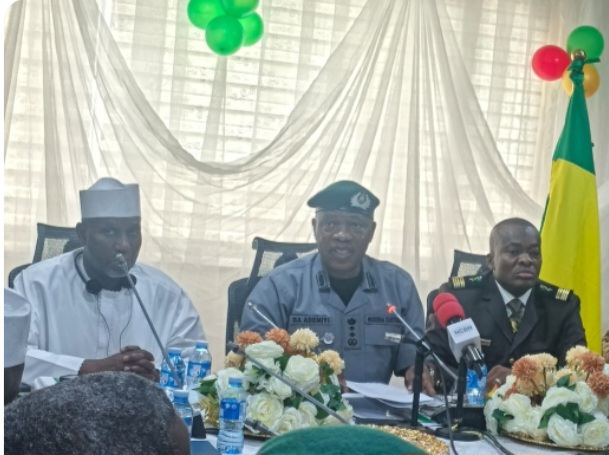
The Nigeria Customs Service (NCS) and the Customs Administration of the Republic of Benin have commenced a fresh joint assessment of the Seme-Krake Joint Border Post, in a renewed push to transform the facility into a fully functional One-Stop Border Post and unlock the enormous trade potential of the Nigeria-Benin corridor.
The initiative, launched on Friday during the assessment and commissioning exercise at Seme-Krake, is designed to move the two Customs administrations beyond merely sharing a border facility to operating an integrated system in which procedures, information, risk management, enforcement and cargo processing are coordinated across the two sides of the border.
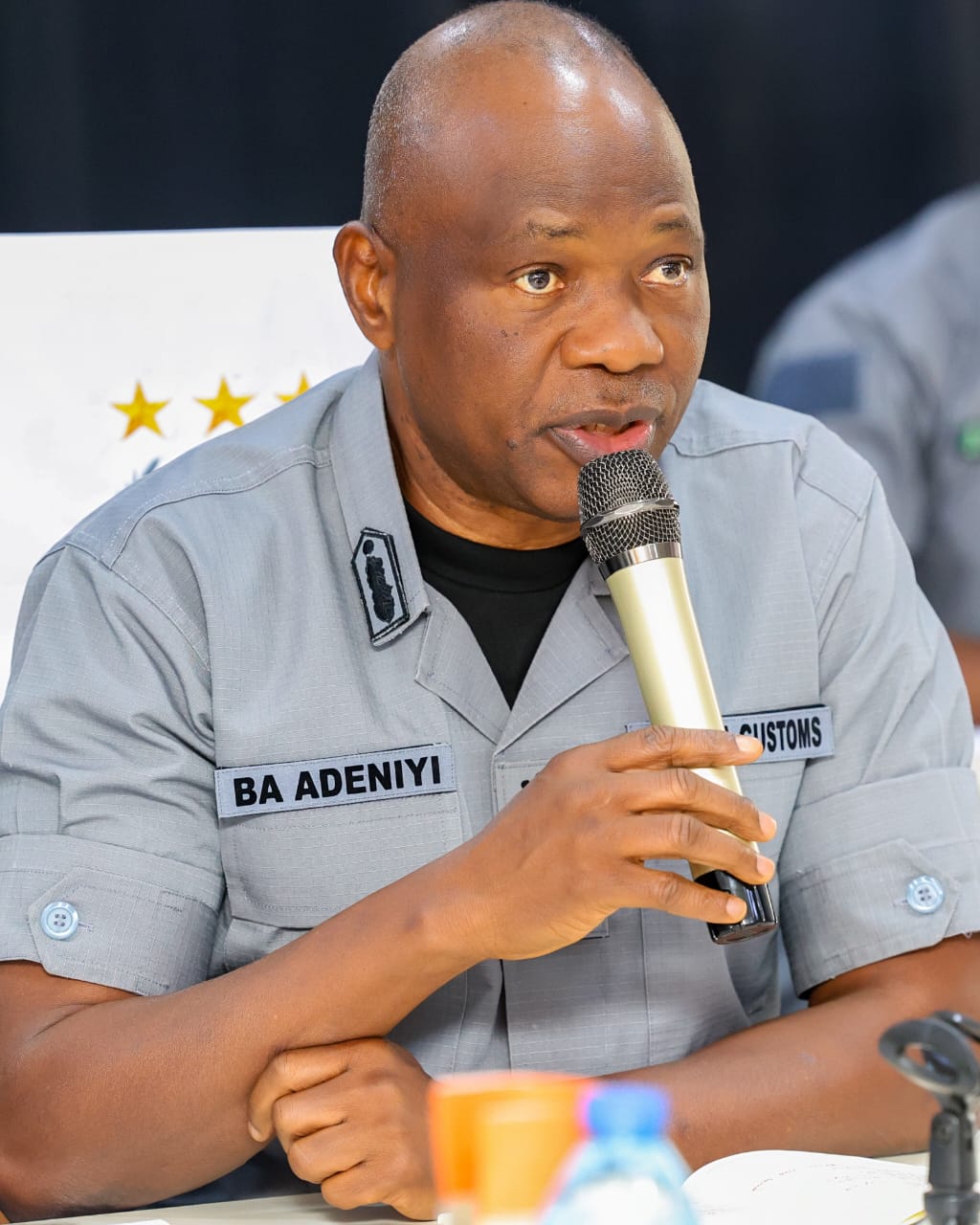
The Comptroller General of the Nigeria Customs Service, Bashir Adewale Adeniyi, MFR, PhD, who led the Nigerian delegation, said the renewed assessment was aimed at closing the operational and technological gaps that had prevented the Joint Border Post from delivering its full promise since its commissioning.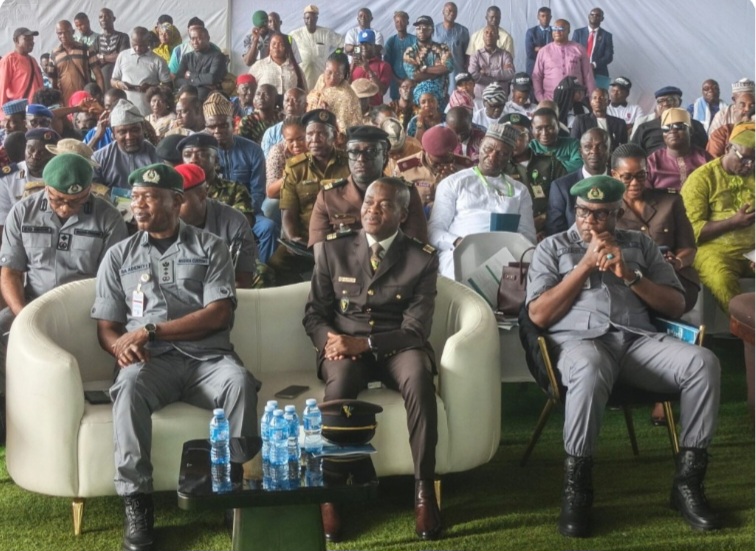
Adeniyi said the objective was to establish a technology-enabled border where a declaration lodged on one side would be visible to the other in real time, transit consignments could be tracked from origin to destination, and enforcement or risk alerts could be shared before they became obsolete.
He declared that the two administrations must now concentrate on delivering the integration that makes a Joint Border Post genuinely joint.
According to him, the physical infrastructure at Seme-Krake has existed for years, but the absence of adequate systems interconnectivity has continued to limit its effectiveness.
The CGC put the challenge in stark terms, observing that having two Customs administrations working under one roof without operating on one system effectively leaves the facility as “two border posts sharing a car park.”
He said the new assessment therefore represents a deliberate attempt to address the systems gap and create the operational foundation for seamless cross-border trade. Adeniyi explained that Nigeria and Benin Republic already possess strong political and economic foundations for integration, pointing to their common membership of the regional community, free-movement arrangements and trade liberalisation framework.
He said the political commitment at the highest level of government had repeatedly been demonstrated, adding that what remained was for the Customs administrations to translate those commitments into practical procedures at the border.
The CGC described Seme-Krake as one of the most strategic economic arteries in West Africa, situated along the Abidjan-Lagos Corridor, which he said carries about 70 per cent of the sub-region’s transit trade.
He stressed that the importance of the corridor made it imperative for both countries to remove unnecessary procedural bottlenecks and ensure that border inefficiencies did not continue to impose costs on traders, transporters, travelers and consumers across the region.
Under the renewed initiative, Adeniyi said both Customs administrations would examine and address several critical areas required to make the One-Stop Border Post fully operational.
These include the restoration of scanning capability, strengthening of access control, surveillance and lighting, establishment of a permanent Nigeria-Benin enforcement and intelligence mechanism, and harmonisation of bilingual standard operating procedures covering cargo, passengers, inspection, transit and incident escalation.
It was revealed that joint risk management would also form part of the new architecture, enabling both administrations to concentrate resources on high-risk consignments rather than subjecting every shipment to the same level of intervention.
The initiative further envisages a joint management structure for the shared infrastructure, with clearly defined responsibilities for preventive maintenance, funding and accountability. Adeniyi also identified better yard organisation, dedicated lanes, holding areas, signage and regulated market spaces as necessary components of an efficient One-Stop Border Post.
He said the objective was not to treat the Seme-Krake facility as a collection of disconnected repairs, but as a strategic border-modernisation programme.
“The objective is to achieve a model technology-enabled Joint Border Post, built on Customs interconnectivity, joint risk management, coordinated enforcement, secure infrastructure, harmonised procedures and accountable joint governance,” he said.
The initiative received strong backing from the Director-General of Benin Customs, Col. Raouf Malehhossou Aboudou, who applauded Adeniyi for what he described as his pragmatic and purposeful approach to reinventing operational systems for enhanced trans-border trade.
The Benin Customs chief pledged that his officers and men would vigorously support the new push to recalibrate joint assessments and strengthen operational cooperation between both administrations.
His position reinforced the bilateral character of the initiative, which seeks to make Seme-Krake a genuinely integrated border facility rather than a conventional international crossing where each administration operates largely within its own procedures.
The proposed interconnectivity is expected to facilitate faster exchange of customs declarations, manifests, transit information, risk profiles and enforcement alerts between the two countries.
Earlier in his welcome address, the Seme Customs Area Controller, Comptroller Abdullahi Shuaibu Kaila, described the exercise as a demonstration of political will, shared vision and unwavering commitment to rewriting the narrative of cross-border trade.
Kaila said Seme-Krake remained one of the biggest and most strategic economic arteries in the ECOWAS sub-region, while also serving as a longstanding symbol of the social and cultural relationship between Nigeria and Benin Republic.
He said the scale and importance of the corridor demanded that both countries move beyond traditional border-management methods and embrace the full workability and applicability of the One-Stop Border Post concept.
According to him, the new approach would advance appropriate procedures, reduce time constraints and guarantee greater transparency in the movement of legitimate goods and persons.
The Controller expressed appreciation to the two Customs chiefs for giving renewed impetus to the operationalisation of the facility. The Seme-Krake Joint Border Post has a long history dating back to the ECOWAS Road Transport and Transit Facilitation Programme.
The decision to establish the facility was taken by ECOWAS Heads of State and Government in Dakar in 2003, while construction commenced in 2011. The European Union financed the project under the 10th European Development Fund for ECOWAS and UEMOA at an estimated cost of €18.29 million.
The facility, situated on about 17 hectares, was commissioned in October 2018 by former President Muhammadu Buhari and former Benin President Patrice Talon.
In 2022, Nigeria and Benin Republic subsequently signed a bilateral agreement on its operationalisation. Yet, despite the infrastructure and successive political commitments, the facility has struggled to achieve the level of integration envisaged under the One-Stop Border Post concept.
The latest joint assessment therefore marks an attempt to address that historical disconnect by focusing on the operational architecture rather than merely the physical infrastructure.
The weekend initiative in comparison to tohers before it clearly defined the critical demarcations. While the buildings, lanes, offices, weighbridge and scanner housing constitute the physical foundation, the real Joint Border Post, is created when the two administrations can see, process and act on the same relevant information in real time.
The initiative is also expected to strike a balance between trade facilitation and border security. Adeniyi said joint intelligence, coordinated enforcement and risk management would ensure that the removal of unnecessary bottlenecks does not translate into weaker controls.
He noted that the border’s future must be built around the principle that legitimate commerce should be facilitated while high-risk transactions and criminal activity receive stronger scrutiny.
Importantly, the CGC also drew attention to women and small-scale traders, who he explained constitute a significant proportion of informal cross-border commerce.
He announced a dedicated facility for women traders on the corridor, aimed at simplifying procedures for small consignments, providing information in languages accessible to traders, creating points of contact and providing a channel for complaints over harassment or unofficial demands.
He argued that an efficient formal border route would encourage traders to abandon informal channels, thereby improving their protection while strengthening government revenue and border control.
The renewed Nigeria-Benin initiative also received goodwill messages from traditional rulers, community leaders and business stakeholders who attended the event.
Among them were the Alapa of Apa Kingdom, HRH Oba (Dr.) Onyekan Adekanmi Joseph; the Onibereko of Ibereko Kingdom, HRH Oba Joseph Adewale Okoya; President of the Badagry Chambers of Commerce, Industry and Agriculture, Mr. Yahaya Idris; and Chairman of Badagry West Local Government Area, Hon. Ibrahim Kayode.
Their support underscored the expectation within the border communities that a genuinely functional One-Stop Border Post would translate into shorter processing times, greater transparency, improved security and increased commercial opportunities.
The renewed assessment also provides a platform for addressing long-standing concerns of traders and freight forwarders, including restrictions affecting vehicle movement through the corridor.
Responding to an appeal by the ANLCA Seme Chapter Chairman, Alhaji Abioye Toyin Wasiu, for a review of the vehicle restriction, Adeniyi explained that such restrictions could be reconsidered as trans-border trade interconnectivity becomes fully functional.
The implication is that the new One-Stop Border Post initiative is not simply about infrastructure or faster clearance. It could ultimately provide the operational confidence required to progressively review restrictions that have constrained legitimate cross-border commerce.
For the two Customs administrations, however, the ultimate test will be implementation. Known for his pragmatic stance, Adeniyi said the success of the initiative would not be measured by the number of agreements signed or ceremonies conducted, but by tangible improvements in the experience of people and businesses using the corridor.
He said the real measure would be whether a truck travelling from Cotonou to Lagos could clear the border once instead of twice, whether a trader could cross in an hour rather than a day, and whether an officer on one side could immediately access relevant information available to an officer on the other.
That, he said, would demonstrate that Nigeria and Benin Republic had finally moved from the idea of a Joint Border Post to the reality of one. With the latest joint assessment, Seme-Krake is therefore being positioned as a test case for a new generation of border management in West Africa—one in which technology, interconnectivity, joint risk management and coordinated enforcement are deployed to make regional integration work at the point where it matters most: the border.
In the CGC’s delegation was the Zonal Coordinator, ACG Mohammed Babandede, Controller Federal Operations Unit, Zone A, Comptroller Gambo Aliyu, among others.









Wasiu, Seme ANLCA Chairman Calls for Review of Vehicle Restriction

Seme-Krake: Nigeria, Benin Launch Joint Assessment to Revive One-Stop Border Post

Unity Schools Crisis: Ministry Must Lead With Dialogue, Not Directives

‘Vehicle Ban Through Seme Border Will Be Lifted, If…’ — Adeniyi

Oyetola’s Strategic Investment Moves Reaches Copenhagen

Recruitment 2025/26: Customs Begins Final Phase Screening, Tasks Candidates on Discipline

Apapa Customs Intercepts N43.59bn Worth Offensive Cargo

Badagry Port: Infrastructure Vision or Election-Season Bargaining Chip?

SON, NAFDAC: Unofficial Toll Gates of Nation’s Seaports?
NIMASA Moves To Overhaul 32-Year-Old Seafarer Training Curriculum

NCS at 65: The Quiet Restructuring Behind Customs’ ₦11.07trn Revenue Ambition

Omatseye, Ex-NIMASA DG To Chair Primetime Reporters’ 2026 Annual Lecture, Awards

ANLCA Board is intact, cannot be wished away by anybody’-Elochukwu

B-R-E-A-K-I-N-G: Effedua, Rector MAN Oron, Resigns

EFCC’s Probe: Okowa Plots Sheriff’s Removal Despite London Accord

Customs Trains ANLCA Members, Others on B’Odogwu Portal

NPA’s Alleged Executive Management Fight: The Half Truth & Truth

ANLCA Board Election: Know Your Candidates
‘Why We Launched B-Odogwu Pilot Scheme With Webb Fontaine Still Running’ – Adeniyi

Onyemekara Promoted GM, Appointed NPA’s New Spokesperson

Nigeria Customs: Trust, Competence And The Oramalugo Factor

‘Rush To Break News Can Lead To Brush With Cybercrime’- Police

Kebbi Is Hub of Hard Drugs Smuggling In Northern Region’ – Oramalugo

‘Our Trade Security Is More Protected Under B’Odogwu’ – Daniyan