
Business
‘Vehicle Ban Through Seme Border Will Be Lifted, If…’ — Adeniyi


BY EGUONO ODJEGBA
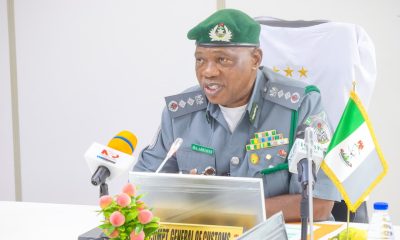
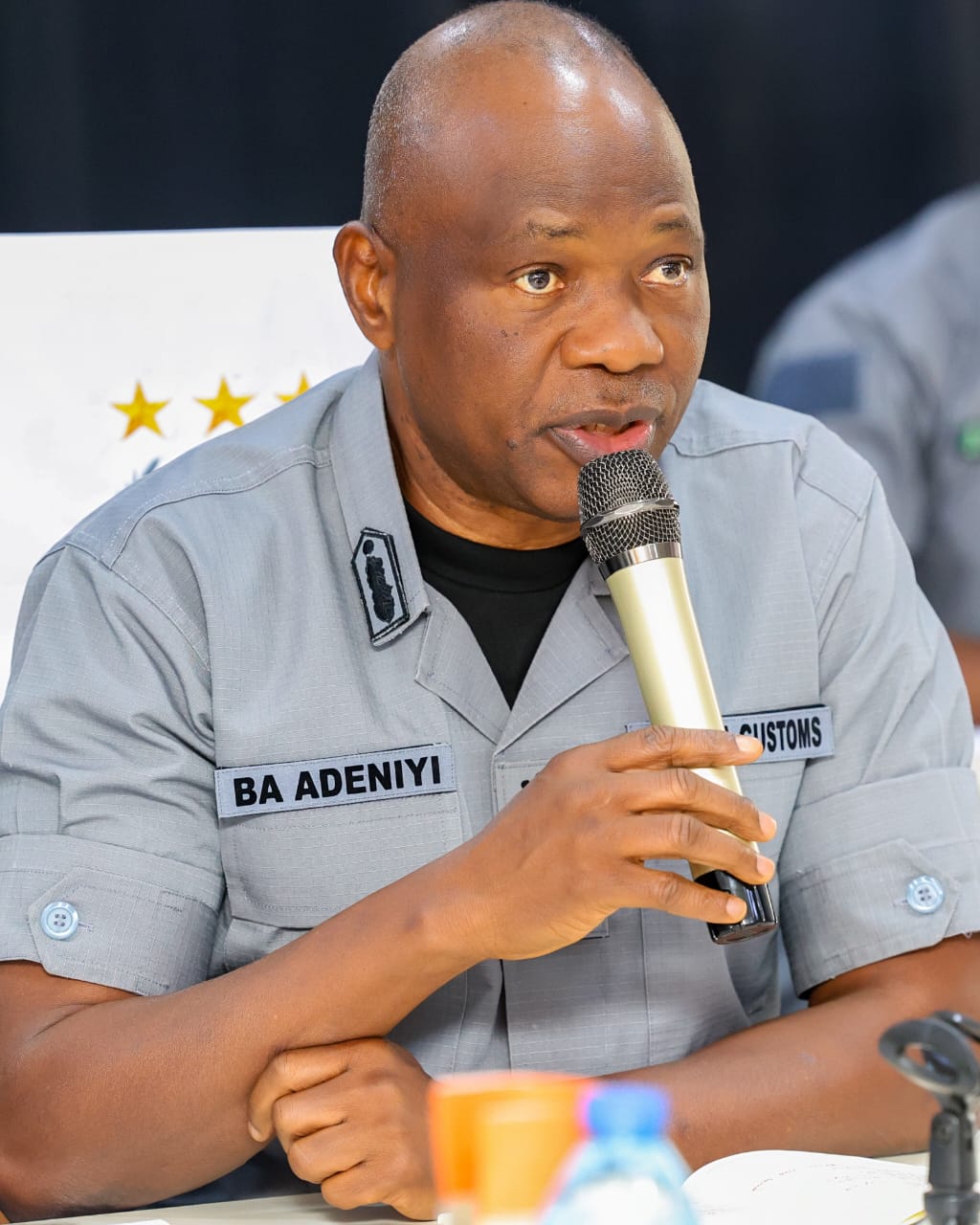
The Comptroller General of the Nigeria Customs Service (NCS), Bashir Adewale Adeniyi, MFR, has indicated that the existing restriction on the movement of vehicles through the Seme-Krake land border could be reviewed and lifted once the emerging Nigeria-Benin Republic trans-border trade interconnectivity arrangement becomes fully operational.
Adeniyi, who spoke at Seme on Friday, September 11, 2026, explained that the issue was not limited to vehicles, stressing that a functional interconnectivity framework would create the confidence and operational conditions required to progressively harmonise trade restrictions across the broader value chain.
His position followed an appeal by the Chairman of the Association of Nigerian Licensed Customs Agents (ANLCA), Seme Chapter, Alhaji Toyin Wasiu, who spoke on behalf of traders, freight forwarders and clearing agents operating along the corridor.
Wasiu had urged the Customs authorities to review and lift the restriction on vehicles coming through the border, arguing that such a step would stimulate legitimate commercial activities and further support businesses dependent on the Seme corridor.
But responding to the appeal, Adeniyi said the pathway to removing such restrictions was tied to the success of the emerging joint border-management and trade-interconnectivity architecture.
“Like the ANLCA Chairman requested in his remarks, we are all here to achieve the process for seamless trade,” Adeniyi said, explaining that once the interconnectivity scheme was fully operational, Customs would be in a stronger position to project its successes and take steps towards harmonising existing trade restrictions.
In addition, the CGC made trust and compliance the central plank of his intervention, arguing that seamless cross-border trade cannot be achieved merely by putting infrastructure and technology in place.
According to him, confidence must first be built between the agencies, operators and traders on both sides of the border.
He said trust established through sustained compliance would generate mutual gains in the movement of goods and people, while expanding commercial opportunities between Nigeria, Benin Republic and the wider West African region.
Adeniyi therefore challenged government agencies on both sides of the divide, particularly the two Customs administrations, to build the required level of mutual trust capable of supporting joint operations and making seamless assessment of trade and movement a practical reality.
This, he suggested, would ultimately provide the evidence and confidence needed for governments to reconsider restrictions that currently affect legitimate cross-border commerce.
The CGC spoke against the backdrop of the launch of the Joint Nigeria-Benin Republic One Stop Border Post Assessment, an initiative designed to deepen collaboration between the two Customs administrations and improve the manner in which cross-border trade and movement are assessed.
The assessment initiative represents an important operational test of the two countries’ commitment to reducing duplication, improving coordination and creating a more predictable trading environment along one of West Africa’s busiest land corridors.
- Rather than treating the border as two separate operational territories, the emerging approach seeks to strengthen cooperation between agencies so that traders and other legitimate users can experience a more integrated border process.

For Customs, the success of such an arrangement could also provide an important basis for addressing long-standing complaints from border communities and trade operators over restrictions, delays and multiple procedures.
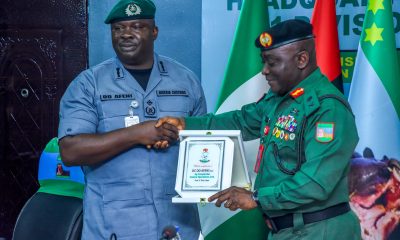
Earlier, the Directeur Général of Benin Customs, Col. Raouf Malehhossou Aboudou, applauded Adeniyi for what he described as pragmatism and purposefulness in reinventing operational systems aimed at improving trans-border trade.
Aboudou said the Benin Customs administration would vigorously support the new effort to recalibrate joint assessments, assuring that his officers and men were ready to work with their Nigerian counterparts towards achieving the objectives of the initiative.
His remarks underscored the significance of bilateral Customs cooperation to the success of the Seme-Krake corridor, where activities on one side of the border inevitably have consequences for trade and enforcement operations on the other.
In his welcome address, the Seme Customs Area Controller, Comptroller Abdullahi Shuaibu Kaila, thanked Adeniyi and his Benin Republic counterpart for their commitment to taking seamless cross-border trade to what he described as a new level of renewed energy and vitality.
Kaila’s intervention also provides a useful operational context to the CGC’s message, given the strategic position of the Seme corridor in Nigeria’s trade relationship with Benin Republic and the wider West African market.
Under the emerging framework, the challenge before the command is to balance trade facilitation with border security, revenue protection and enforcement of legitimate restrictions.
The event also attracted goodwill messages from traditional rulers and community leaders on both sides of the border, who welcomed the renewed efforts to improve cooperation and facilitate legitimate movement across the corridor.
Their interventions could form an important human-interest dimension of the report: for communities living around Seme-Krake, the border is not merely a Customs checkpoint but a daily economic and social lifeline.
The traditional institutions and community representatives can therefore be presented as stakeholders with a direct interest in seeing the new assessment mechanism succeed.
Their support also reinforces the argument that effective border management must accommodate both national security interests and the legitimate economic aspirations of border communities.
The most significant implication of Adeniyi’s statement is that the vehicle issue may only be the immediate manifestation of a much wider policy question.
Overall, the CGC’s remarks suggest that the ultimate objective is to establish an environment in which restrictions can be progressively harmonised on the strength of measurable compliance, operational transparency and mutual confidence between Nigeria and Benin Republic.
In this sense, rather than treat the proposed review of vehicle restrictions as an isolated concession to traders but as part of a broader bargain, integrating greater compliance by traders and stronger inter-agency cooperation in exchange for a more progressive, more seamless movement and fewer trade restrictions.
It thus gives the One Stop Border Post assessment a significance beyond the ceremony itself.
The Seme-Krake corridor has long stood at the intersection of trade facilitation, border security, regional integration and the livelihood of thousands of businesses and communities.
The launch of the One Stop Border Post Assessment presents a clear bargain to stakeholders that the route to greater freedom of movement may not be through pressure for unilateral concessions, but through demonstrable compliance, effective interconnectivity and mutual trust.
For traders and freight forwarders who have been seeking the lifting of the vehicle restriction, the CGC’s position offers a potential opening, one dependent on the success of the new bilateral framework.
If the One Stop Border Post assessment delivers the seamless, trusted and coordinated border operation envisaged by Nigeria and Benin Republic, the vehicle restriction could become one of the first trade barriers placed on the table for review, alongside other restrictions affecting the wider cross-border value chain.








Customs Report6 hours ago
ANLCA Airport Crisis: Police Raid Raises Questions Over IGP’s Respect For Court Orders

Maritime6 hours ago
‘We Arrested Several Vessels Violating Cabotage Trade’ – NIMASA

Business Focus1 day ago
Customs CGC Says ‘The World Is Connected, Not Borderless’

Customs Report2 days ago
Nigeria Customs Mulls Reviews of Complaints Arising from Recruitment

Politics3 days ago
Edo-Delta Journalists Forum Challenges Political Leaders on Regional Development

Business Maritime4 days ago
Nnadi Urges Nigerian Importers to Shift from Finished Goods to Manufacturing

Business Maritime4 days ago
WMD: Oyetola Recommit to Unlock CVFF Pursuant to Indigenous Operators Financing

Business4 days ago
Customs FOU Zone ‘A’ Hands Over Seized ₦511.4m Pharmaceuticals, Illicit Drugs to NDLEA, NAFDAC

Uncategorized6 days ago
Oyetola Unveils NPERA, Corporate Logo Amid Quiet Enthusiasm

News6 days ago
Nigeria, Benin Urged to Deploy Culture and Traditional Diplomacy to Defuse Border Tensions

Business Maritime6 days ago
Nigeria’s Ports: How Foreign Capital Took the Dinner, While Indigenous Businesses Got the Crumbs (3)

Business6 days ago
FOU Zone A, Police, Army, DSS, Others Strengthen Security Alliance Ahead of Elections

Customs Report6 years ago
ANLCA Board is intact, cannot be wished away by anybody’-Elochukwu

Maritime2 years ago
B-R-E-A-K-I-N-G: Effedua, Rector MAN Oron, Resigns

Features2 years ago
EFCC’s Probe: Okowa Plots Sheriff’s Removal Despite London Accord

Business2 years ago
Customs Trains ANLCA Members, Others on B’Odogwu Portal

Analysis2 years ago
NPA’s Alleged Executive Management Fight: The Half Truth & Truth
Features2 years ago
ANLCA Board Election: Know Your Candidates
Interview2 years ago
‘Why We Launched B-Odogwu Pilot Scheme With Webb Fontaine Still Running’ – Adeniyi

Customs Report1 year ago
Onyeka Makes History As Tin-Can Customs Hit ₦16.4bn A Day

Maritime2 years ago
Onyemekara Promoted GM, Appointed NPA’s New Spokesperson

Customs Report2 years ago
Nigeria Customs: Trust, Competence And The Oramalugo Factor

Customs Report1 year ago
Apapa Customs Collects ₦161b On B’Odogwu Platform In 3 Weeks

Uncategorized2 years ago
‘Rush To Break News Can Lead To Brush With Cybercrime’- Police
Enter ad code her