
Business Maritime
WMD: Oyetola Recommit to Unlock CVFF Pursuant to Indigenous Operators Financing

…As MAN Highlights Seafarer Training Gains
BY EGUONO ODJEGBA
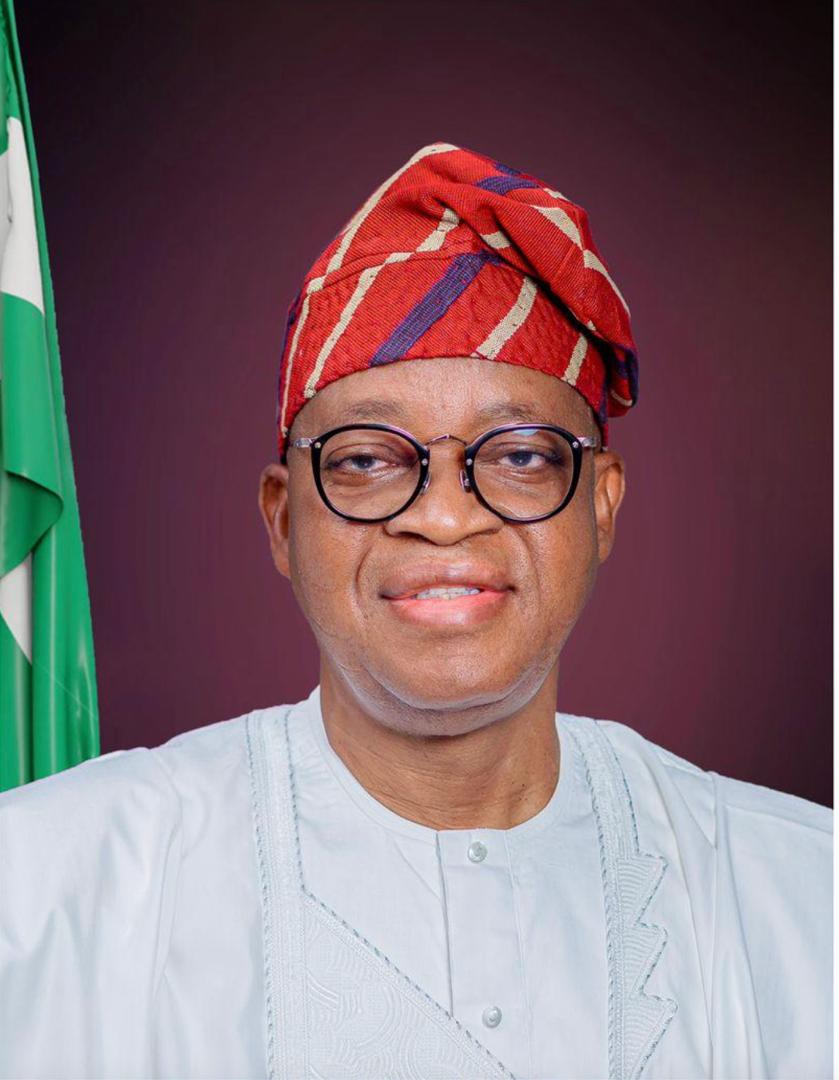
The Federal Government has renewed its commitment to strengthening indigenous shipping capacity, with the Minister of Marine and Blue Economy, Dr Adegboyega Oyetola, directing the Nigerian Maritime Administration and Safety Agency (NIMASA) to work with approved Primary Lending Institutions (PLIs) to accelerate the processing and disbursement of the long-awaited Cabotage Vessel Financing Fund (CVFF) to qualified Nigerian shipowners.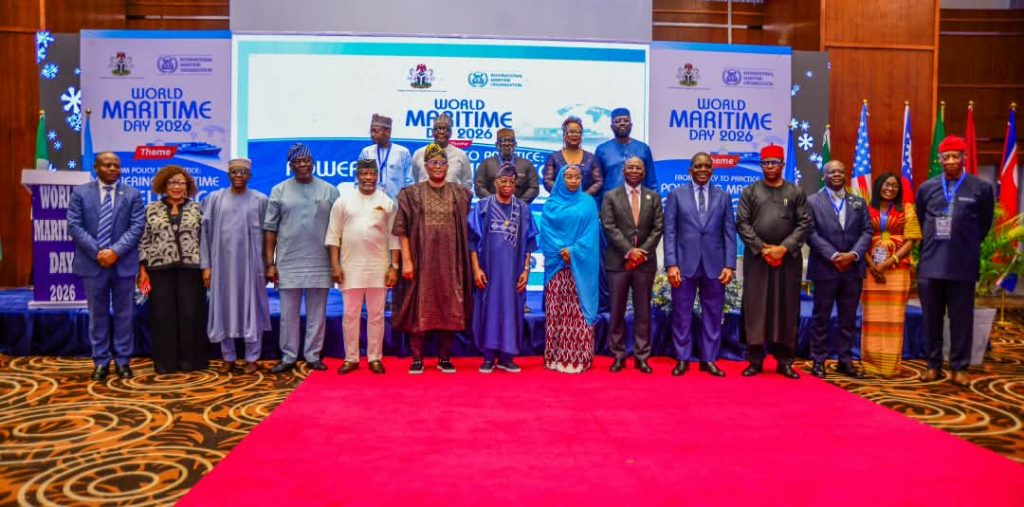
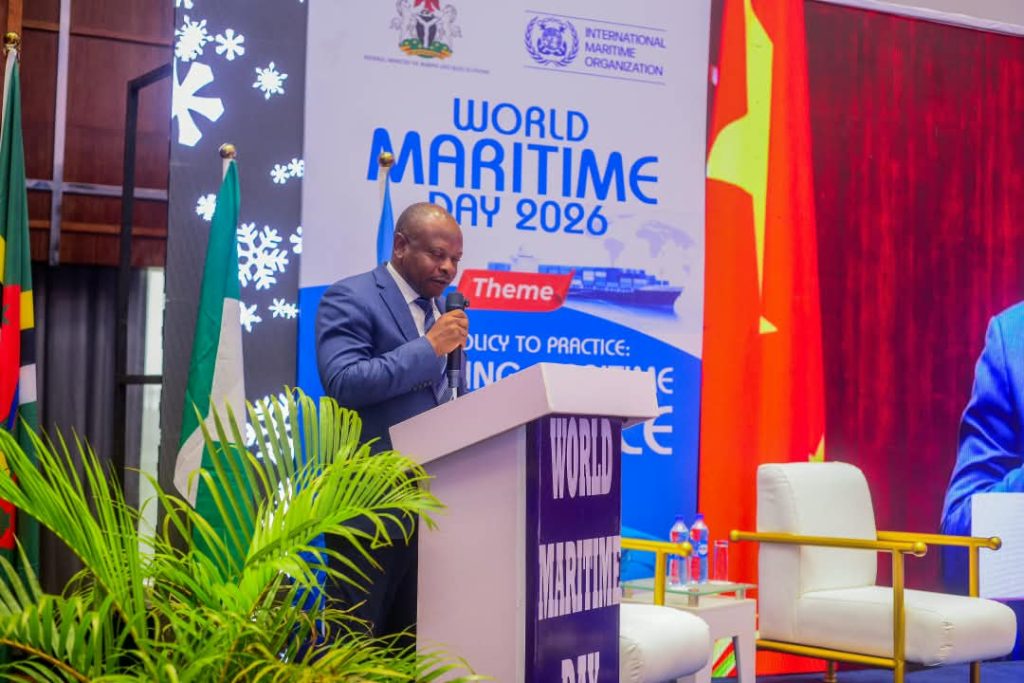
Dr. Kevin Okonna delivering his goodwill message during the WMD celebration in Lagos
The commitment, announced at the Third Quarter 2026 Citizens’ and Stakeholders’ Engagement of the Federal Ministry of Marine and Blue Economy in Victoria Island, Lagos, signals a renewed push to address one of the Nigerian maritime industry’s most enduring challenges: access to affordable financing for indigenous operators seeking to acquire vessels and compete effectively in coastal and inland shipping.
For local shipowners, the fund represents a potentially significant source of capital for expanding fleet capacity, reducing dependence on foreign operators and retaining a greater share of the economic value generated by Nigeria’s maritime trade.
Oyetola reaffirmed the administration’s commitment to implementing the Coastal and Inland Shipping (Cabotage) Act, which seeks to promote Nigerian participation in domestic maritime transportation through local ownership and operation of vessels.
“To our indigenous shipowners, I wish to reaffirm this Administration’s commitment to the development of indigenous shipping capacity and the effective implementation of the Coastal and Inland Shipping (Cabotage) Act,” the minister said.
He acknowledged that progress might require patience but insisted that the government’s direction remained firm.
The minister’s assurance comes against the backdrop of longstanding industry expectations over the deployment of the CVFF, a financing instrument intended to improve Nigerian shipowners’ access to capital for vessel acquisition and other qualifying maritime investments.
Although the minister’s latest statement reinforces the government’s intention to advance the process, the commercial significance of the commitment will ultimately depend on how quickly eligible applicants can access the funds, the terms of lending and the number of indigenous operators able to secure financing.
According to Oyetola, the economic benefits of an effectively deployed CVFF would extend beyond the acquisition of ships to other segments of the maritime value chain, including shipbuilding, marine engineering, vessel maintenance and maritime logistics.
This broader outlook positions indigenous shipping development as an industrial and investment priority rather than simply a vessel-financing programme.
A stronger Nigerian-owned fleet could stimulate demand for locally available technical services, create employment opportunities for seafarers and marine engineers, and expand business prospects for ship-repair facilities, logistics providers and other maritime service companies.
“The effective deployment of the CVFF has the potential to strengthen our indigenous fleet and stimulate investment across the maritime value chain,” Oyetola said.
He added that the government’s ultimate objective was to build an industry in which Nigerians possessed the opportunities, capabilities and resources to own, operate and lead.
However, translating that ambition into measurable economic gains would require more than policy assurances. Transparent lending procedures, predictable timelines, accessible financing conditions and effective monitoring of beneficiaries would be important to ensuring that the fund delivers tangible benefits to indigenous operators and the wider economy.
The minister also underscored the importance of professional training, local expertise development, support for indigenous businesses and strategic investments in building a competitive domestic maritime industry.
The emphasis on local capacity received further support from the Acting Rector of the Maritime Academy of Nigeria (MAN), Oron, Dr Kevin Okonna, who highlighted the institution’s contributions to implementing the Federal Government’s maritime development agenda through professional training, international partnerships and improved educational infrastructure.
While delivering a goodwill message to mark the 2026 World Maritime Day, themed “From Policy to Practice: Powering Maritime Excellence,” Okonna described the theme as a reflection of the transformation being pursued by the Federal Ministry of Marine and Blue Economy.
He said the approval of a National Policy on Marine and Blue Economy and the adoption of an implementation framework had provided a basis for translating policy objectives into practical outcomes, including safer, cleaner and more resilient shipping and improved utilization of Nigeria’s maritime resources.
For the MAN Oron Rector, the development of indigenous shipping cannot be separated from the availability of competent, professionally trained seafarers and maritime specialists capable of supporting a growing domestic fleet.
“As the IMO-SG said in the 2026 WMD message, Seafarers come first in the implementation of IMO policies,” he noted.
The MAN chief said the Academy had significantly improved its capacity to deliver Maritime Education and Training (MET) nationally and internationally over approximately two years. Among the developments he highlighted were sustainable agreements with Nigeria LNG Ship Management Limited (NSML) and the Shipowners Association of Nigeria (SOAN), enabling cadets to undertake mandatory sea-time training under the International Convention on Standards of Training, Certification and Watchkeeping for Seafarers (STCW) aboard internationally trading vessels.
According to him, more than 50 MAN cadets were currently undertaking training aboard NLNG and other trading ships.
The arrangement addresses a critical aspect of maritime education: ensuring that classroom instruction is complemented by practical experience at sea, a prerequisite for developing competent seafarers and preparing graduates for professional employment.
Okonna further disclosed that cadets were now receiving automatic employment or sponsorship for sea-time training during graduation ceremonies, describing the development as part of efforts to improve the transition from training to professional practice.
The Acting Rector also reported that the Academy had attained Integrated Management System certification in line with ISO 9001:2015 quality management requirements and ISO 21001:2025 educational organisation management requirements.
He said the institution had introduced an Enterprise Content Management System to improve the processing of files and memoranda, correspondence and other administrative procedures, with the objective of promoting operational efficiency and transparency.
The Academy, he added, had strengthened its international professional relationships through partnerships with the Nautical Institute, United Kingdom; the Institute of Marine Engineering, Science and Technology (IMarEST), United Kingdom; and the Chartered Institute of Logistics and Transport (CILT), Nigeria.
Speaking further, Okonna said all MAN cadets are registered with at least one international professional body to support their professional development and career progression.
He also disclosed that the Academy had gained recognition from the Abuja Memorandum of Understanding on Port State Control for West and Central Africa for providing training and capacity building for Port State Control Officers in the region and beyond.
Other developments cited included investments in modern training facilities, simulators and faculties, as well as efforts to create a more conducive learning environment through alternative electricity supply, including solar power.
Okonna said MAN continued to play a leadership role in maritime education and training in Nigeria, including curriculum reviews, and had successfully hosted the first regional exchange visit among major National Maritime Education and Training Institutions under the auspices of the Maritime Organisation of West and Central Africa (MOWCA).
He attributed the achievements to the strategic leadership of the Minister of Marine and Blue Economy and expressed appreciation for the ministry’s support.
Unarguably, the policy positions outlined by Oyetola and the institutional developments reported by Okonna point to two interconnected requirements for a competitive Nigerian maritime industry: access to capital and the availability of skilled personnel.
While the CVFF is expected to support the expansion of indigenous vessel ownership, the Maritime Academy’s training initiatives seek to develop the human capital required to operate and maintain those vessels safely and professionally.
Without accessible financing, indigenous shipowners may struggle to expand their fleets, regardless of the availability of trained personnel. Conversely, without a steady pipeline of competent seafarers, engineers and maritime professionals, increased vessel ownership may not translate into sustainable operational capacity.
The government’s challenge, therefore, is to ensure that financing, maritime education, regulatory enforcement and investment in supporting infrastructure advance in a coordinated manner.
The engagement also featured a presentation by Jens Ole Bach Hansen, Ambassador of the Kingdom of Denmark to Nigeria, on “Denmark’s Experience in Building a Sustainable Blue Economy: Lessons for Strategic Partnerships, Investment and Technology Transfer with Nigeria.”
The presentation provided an international perspective on opportunities for Nigeria to draw lessons from established maritime economies in developing sustainable blue-economy industries through partnerships, investment and technology transfer.
For indigenous shipowners and other maritime businesses, the central issue remains whether renewed policy commitments will produce the financing, infrastructure, skills and investment conditions required to build a stronger domestic maritime industry.
Oyetola’s directive to NIMASA and the approved lending institutions has renewed expectations surrounding the CVFF. The next important measure of progress will be the fund’s implementation: how soon qualified applicants gain access, how effectively the financing supports vessel ownership and how much additional business activity it generates across the maritime value chain.
As the Federal Government pursues its blue-economy agenda, the convergence of ship-financing commitments and maritime training reforms offers a pathway towards greater Nigerian participation in shipping. Delivering on that promise will require sustained implementation, accountability and demonstrable results for indigenous operators and the wider economy.








Nnadi Urges Nigerian Importers to Shift from Finished Goods to Manufacturing

WMD: Oyetola Recommit to Unlock CVFF Pursuant to Indigenous Operators Financing

Customs FOU Zone ‘A’ Hands Over Seized ₦511.4m Pharmaceuticals, Illicit Drugs to NDLEA, NAFDAC

Oyetola Unveils NPERA, Corporate Logo Amid Quiet Enthusiasm

Nigeria, Benin Urged to Deploy Culture and Traditional Diplomacy to Defuse Border Tensions

Nigeria’s Ports: How Foreign Capital Took the Dinner, While Indigenous Businesses Got the Crumbs (3)

FOU Zone A, Police, Army, DSS, Others Strengthen Security Alliance Ahead of Elections

Nigeria’s Ports: How Foreign Capital Took the Dinner, While Indigenous Businesses Got the Crumbs (2)

Former Senatorial Candidate, Hajia Nike AbdulRahman Dumps NDC, Defects to APC

Nigeria’s Ports: How Foreign Capital Took the Dinner, While Indigenous Businesses Got the Crumbs

How Anani’s Tin Can Command Intercepted a ₦3.6 Billion Illicit Drug Shipment

Ibrahim, Ogun 1 Customs New Sheriff Unveils Strength Beneath His Quiet Mien
ANLCA Board is intact, cannot be wished away by anybody’-Elochukwu

B-R-E-A-K-I-N-G: Effedua, Rector MAN Oron, Resigns

EFCC’s Probe: Okowa Plots Sheriff’s Removal Despite London Accord
Customs Trains ANLCA Members, Others on B’Odogwu Portal

NPA’s Alleged Executive Management Fight: The Half Truth & Truth
ANLCA Board Election: Know Your Candidates
‘Why We Launched B-Odogwu Pilot Scheme With Webb Fontaine Still Running’ – Adeniyi

Onyemekara Promoted GM, Appointed NPA’s New Spokesperson

Nigeria Customs: Trust, Competence And The Oramalugo Factor

‘Rush To Break News Can Lead To Brush With Cybercrime’- Police

Kebbi Is Hub of Hard Drugs Smuggling In Northern Region’ – Oramalugo

Onyeka Makes History As Tin-Can Customs Hit ₦16.4bn A Day