
Business
Politics Without Bitterness: Whither ANLCA in 2027?

BY EGUONO ODJEGBA
In the ports and freight industry, cargoes move faster than rumours, but politics travels faster than both.
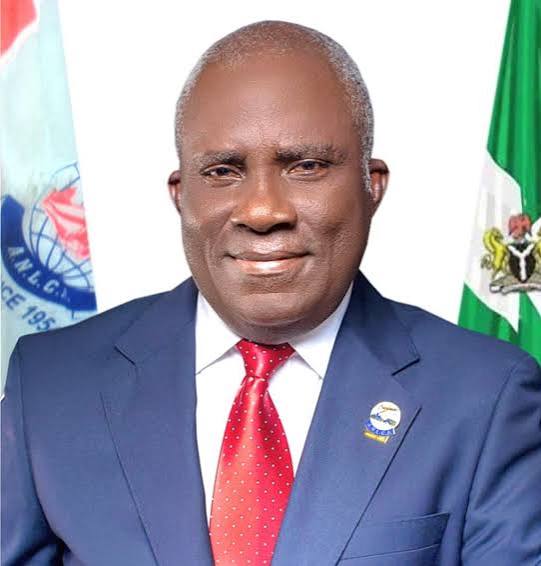
NP, E.K Nwokeoji
As conversations quietly shift from tariffs, Customs modernisation and the perennial challenges of doing business at the nation’s gateways to the politics of succession within the leading freight forwarding and customs brokerage groups, especially in the Association of Nigerian Licensed Customs Agents (ANLCA), one question has begun to dominate discussions in port corridors, terminal offices and association secretariats:
What happens in 2027 or in the coming dispensation? Ordinarily, succession politics should be the least of ANLCA’s worries. The association should be focusing on the impact of the Nigeria Customs Service reforms, the implementation of the National Single Window, rising operational costs, multiple charges, infrastructure deficits and the shrinking profit margins confronting customs brokers and freight forwarders.
But ANLCA is no ordinary association. Its political history has become as complex as the cargo clearance process itself. The association is still emerging from one of the darkest periods in its history, a prolonged leadership crisis that left reputations battered, friendships destroyed and the association dangerously divided. For years, ANLCA became synonymous not with advocacy but with litigations; not with professional development but with suspensions, counter-suspensions and competing claims to authority.
At some point, the association appeared to be fighting itself more fiercely than it was fighting unfriendly government policies. The crisis reached a critical stage during the latter part of the administration of former National President, Iju Tony Nwabunike. His eventual absence from the political equation created fresh uncertainties and reopened old arguments over succession, representation and political balance within the association.
It was during that turbulent period that few influential voices across the industry canvassed what many considered the only politically sensible option: allow the South-East to complete what had effectively become its interrupted turn in the leadership arrangement.
Whether ANLCA chooses to admit it publicly or not, the association has for decades operated an unwritten but widely acknowledged power-sharing understanding between the two dominant political blocs in the freight forwarding industry: the Igbo and the Yoruba.
It was never written into the constitution. It was never gazetted. It was never legally binding. Yet, like many enduring political arrangements in Nigeria, it survived because stakeholders believed it served a higher purpose — stability. In an industry where trust is scarce and interests collide daily, that gentleman’s agreement became ANLCA’s unofficial stabilizer.
Insiders who spoke with this reporter noted that although the arrangement may not have been perfect, they argued that it worked. Not everyone, however, views the arrangement through the same constitutional lens.
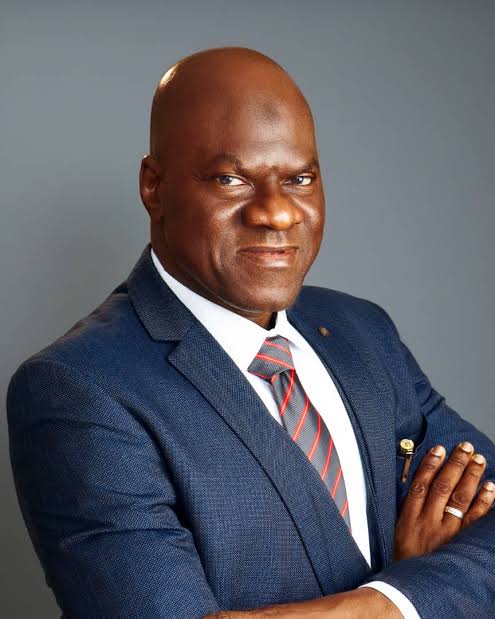
BoT Chairman, Barr. T. Mustapha
ANLCA chieftain, Chief Sir John Ofobike, points out that nowhere in the association’s constitution is leadership tied to ethnic rotation or a turn-by-turn arrangement between the Igbo and Yoruba blocs. According to him, the rotational understanding has endured merely as a gentleman’s agreement, sustained largely because of the demographic realities within the association and the dominance of the two major ethnic blocs.
He argues that such an arrangement, if elevated beyond convention, could inadvertently shut out members from other parts of the country, including the North and the Middle Belt, from ever aspiring to the highest office in the association.
Even so, Ofobike acknowledges that political realities are often different from constitutional provisions. According to him, it has become the accepted norm over the years that power alternates between an Igbo and a Yoruba president, a pattern many stakeholders believe should continue in the interest of peace and tranquility within the association.
His words: “There is nowhere in ANLCA Constitution where election is based on turn-by-turn basis for Igbo or Yoruba to become president. The rotational system based on gentlemen’s agreement is not constitutional. It has been working for us probably because of the two major tribal majority in the association. There is no tendency that any member from the North or Middle Belt can take power under such arrangement.
“Be that as it may, it has been the norm that after an Igbo man, a Yoruba will take over. It is believed that we should continue in that manner to sustain peace and tranquility. However, only God knows who will takeover, more so, it is also the function of the electorate who decides who will rule over them. Anything that has a beginning must have an end. Emenike has a four-year regime. Definitely, it is coming to an end by next year and members are studying his scorecard to determine if he has performed well or poorly. So, it is the electorate who will decide his fate if he chooses to recontest. You know, people will be jostling they want to contest to be number one member of ANLCA, but you also know that if wishes were horses, beggars would ride.
“Now many people are saying President Tinubu is not doing well, they will do this, they will do that. It is left for the Nigerian people to decide who leads them at the appropriate time. So shall it be with ANLCA politics. It is only God who knows what would happen tomorrow, not men. If any person is telling you he has the power to see tomorrow, that person is telling you lies.”
Then came the 2023 election following the French leave embarked upon by Iju Tony Nwabunike. Mr. Emenike Nwokeoji, an Igbo candidate, defeated Dr. Kayode Farinto, a Yoruba and one of the most visible faces in freight forwarding advocacy, to emerge National President.
To many, the victory was not simply an electoral triumph. It was the completion of an unfinished political journey. It was the South-East concluding a tenure many stakeholders believed had been disrupted by circumstances. Most importantly, it was viewed as the price for peace.
Today, with barely a year left in the life of the current administration, a familiar political storm appears to be gathering over the horizon. There are increasing whispers within sections of the association that some interests are urging the current president to seek re-election in 2027 despite quiet talks about his earlier promise to do ‘one term’ and earlier expectations in many quarters that he would serve for only a term.
Whether those conversations are real, exaggerated or merely speculative is almost beside the point. The fact that the conversations exist at all is politically significant.
Supporters of continuity have their arguments. They insist that governance should not be sacrificed on the altar of ethnic balancing. They argue that competence should matter more than geography. They contend that if an administration is performing, members should reserve the right to renew its mandate.
Remembering that many had expressed disappointment when Dr. Kayode Farinto ignored plea not to throw his hat in the ring as a Yoruba candidate but to allow the last election remain an exclusive Igbo contest; only time will tell if an Igbo candidate also chooses to join the contest come 2027.
Honourable men respect gentlemen agreement, irrespective of whether or not such agreements are constitutionally codified. The defiant however always hide behind technicalities and loose logic to cut corners and to overturn sensible frameworks that supports peaceful gestures.
For this reason, the ANLCA 2027 election is potentially unsure and dicey as far as the rotational arrangement the presupposes an exclusive Yoruba contest is concerned.
Current National Secretary, Mr. Olumide Fakanlu, belongs broadly to this school of thought. He argues that politics is dynamic and recalls that despite the existence of the rotational understanding, Dr. Kayode Farinto still contested against Emenike Nwokeoji in the last election because the arrangement has no constitutional backing.
According to Fakanlu, the rotation principle remains a gentleman’s agreement that can be respected or ignored depending on prevailing political realities. In his view, if members still desire the services of the incumbent president and he chooses to seek another term, nothing in the constitution prevents him from doing so.
Speaking on the issue, Fakanlu said: “Well, politics is dynamic, you will remember that when the present National President was coming out to contest, a Yoruba man, Farinto contested against him, despite the rotational agreement, because it is not in our constitution. So, this rotational leadership is not a constitutional or policy matter, it is just gentlemen’s agreement that can be respected or disrespected.
“Like l said earlier, politics is dynamic, so, if the members still want the service of Mr. Emenike Nwokeoji, he can recontest and could still win; it depends on what he wants. So, an Igbo man can contest and a Yoruba man can takeover too, it depends on the wish of the voters and members.”
For him, an Igbo candidate can emerge again just as a Yoruba candidate can equally take over the leadership, depending entirely on the wishes of ANLCA members and the verdict of the electorate.
Chief Ofobike takes a similarly democratic position on the issue of re-election, insisting that ultimately it is the electorate that determines who governs them. As he puts it, every administration has a lifespan and the present one is approaching its constitutional end, leaving members to study the scorecard of the incumbent administration before making their judgment at the ballot box.
Fair enough. But politics, especially association politics, is rarely governed by logic alone. It is governed by memory. And memory in ANLCA politics is long. Those advocating a second term may win the arithmetic and still lose the politics.
Because the question many stakeholders would ask is simple: If the understanding during the crisis was that the South-East would complete its second tenure before power rotates, what moral argument exists for altering the arrangement midway?
Agreements are not tested when they are convenient. They are tested when they become inconvenient. That is what gives them value. ANLCA must therefore decide what kind of political culture it wishes to institutionalize. Is it a culture where unwritten agreements are respected because they preserve peace? Or a culture where every political understanding lasts only until someone discovers the numerical strength to overturn it?
The maritime industry has witnessed enough divisions already. From terminal operators and shipping companies to freight forwarders and government agencies, the sector is struggling with enough uncertainties without adding another round of ethnic political confrontation within its foremost customs brokerage association.
The ports need advocacy. The members need representation. The industry needs stability. Another bruising succession war is perhaps the last thing anyone needs.
This is why the debate should never be reduced to whether the next ANLCA president should be Igbo or Yoruba. That would be missing the point entirely.
The real issue is credibility. Can political commitments survive ambition? Can institutional memory prevail over immediate advantage? Can ANLCA prove that it learnt something from the crisis that almost destroyed it?
History suggests that organisations rarely collapse because of external enemies. More often, they are weakened from within by unresolved ambitions and avoidable conflicts. The greatest legacy any administration can leave behind is not merely projects commissioned or meetings attended. It is the preservation of peace.
As 2027 approaches, ANLCA stands once again at a familiar crossroads. One road leads to consensus, the other leads to confrontation. One leads to politics without bitterness. And yet again, the other leads back to the ghosts of yesterday.
The association has travelled that road before. Its members know exactly where it ended. The hope across the maritime community is that wisdom, this time, arrives before ambition.
As Chief Ofobike philosophically reminds stakeholders, tomorrow belongs neither to political calculations nor to personal ambitions, but to the collective decision of members and, ultimately, to God.
In the end, ANLCA’s future may depend less on who wins the next election and more on whether the association can preserve the delicate balance between constitutional democracy and political trust that has kept it together for decades.







Oyetola Unveils NPERA, Corporate Logo Amid Quiet Enthusiasm

Nigeria, Benin Urged to Deploy Culture and Traditional Diplomacy to Defuse Border Tensions

Nigeria’s Ports: How Foreign Capital Took the Dinner, While Indigenous Businesses Got the Crumbs (3)

FOU Zone A, Police, Army, DSS, Others Strengthen Security Alliance Ahead of Elections

Nigeria’s Ports: How Foreign Capital Took the Dinner, While Indigenous Businesses Got the Crumbs (2)

Former Senatorial Candidate, Hajia Nike AbdulRahman Dumps NDC, Defects to APC

Nigeria’s Ports: How Foreign Capital Took the Dinner, While Indigenous Businesses Got the Crumbs

How Anani’s Tin Can Command Intercepted a ₦3.6 Billion Illicit Drug Shipment

Ibrahim, Ogun 1 Customs New Sheriff Unveils Strength Beneath His Quiet Mien

Logistics Synergy: NPA Advances Integration of ICDs Under New Reform Agenda

Teamwork, Discipline, Central to Our Enforcement Mandate —Jonah Charges Customs Marine Operatives

How the UAE-Nigeria Partnership Can Transform Our Ports
ANLCA Board is intact, cannot be wished away by anybody’-Elochukwu

B-R-E-A-K-I-N-G: Effedua, Rector MAN Oron, Resigns

EFCC’s Probe: Okowa Plots Sheriff’s Removal Despite London Accord
Customs Trains ANLCA Members, Others on B’Odogwu Portal

NPA’s Alleged Executive Management Fight: The Half Truth & Truth
ANLCA Board Election: Know Your Candidates
‘Why We Launched B-Odogwu Pilot Scheme With Webb Fontaine Still Running’ – Adeniyi

Onyemekara Promoted GM, Appointed NPA’s New Spokesperson

Nigeria Customs: Trust, Competence And The Oramalugo Factor

‘Rush To Break News Can Lead To Brush With Cybercrime’- Police

Kebbi Is Hub of Hard Drugs Smuggling In Northern Region’ – Oramalugo

Onyeka Makes History As Tin-Can Customs Hit ₦16.4bn A Day