Business
Nigeria’s Blue Economy: Experts Seek Shift from Maritime Potential to Productivity

BY FUNMI ALUKO
For 21 years, TransQuest Media has chronicled Nigeria’s transport, maritime and logistics journey. But on Saturday, July 25, 2026, at Shoregate Hotel, Ikeja GRA, Lagos, the organisation did more than mark another anniversary.
It threw a fresh challenge into the national arena: Can Nigeria finally move beyond talking about the enormous wealth in its waters and begin converting its maritime potential into measurable economic prosperity?
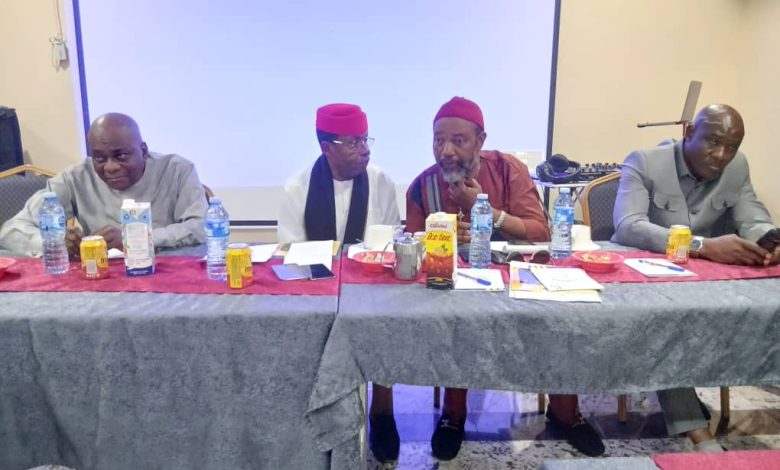
That question provided the intellectual thread running through the 21st Anniversary Lecture and Awards ceremony of TransQuest Media, which brought together policymakers, maritime regulators, Customs chiefs, industry leaders, researchers, academics and logistics experts to interrogate the opportunities and contradictions surrounding Nigeria’s blue economy.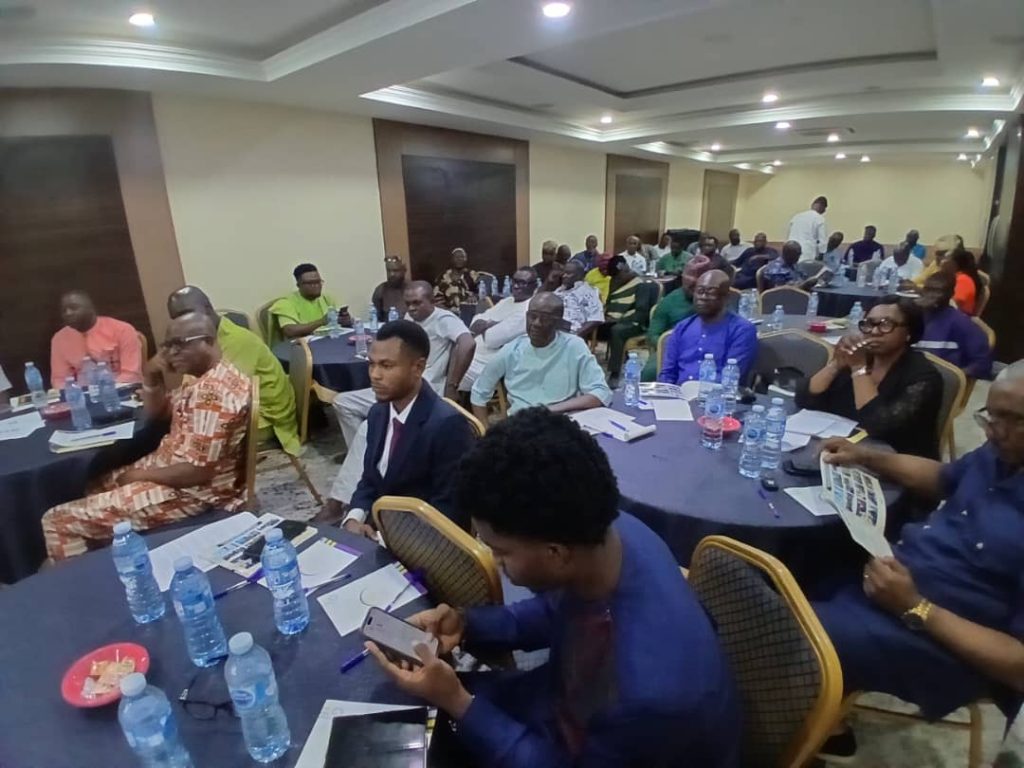
Held under the theme, “Re-Appraising Nigeria’s Blue Economy: Charting a Pathway to Sustainable Growth,” the gathering was less a ceremonial anniversary than a strategic conversation about the future of a sector widely regarded as critical to Nigeria’s diversification ambitions.
And the message was clear: Nigeria does not lack maritime resources; what it lacks is the governance discipline, investment, infrastructure, coordination and political will to turn those resources into sustained economic value.
In his welcome address, Publisher of TransQuest Media, Mr. Felix Kumuyi, reflected on a 21-year journey built around credible journalism, informed public discourse, progressive policy advocacy and the recognition of excellence across the transport and maritime value chain.
He noted that the annual lecture had evolved beyond an anniversary event into an important intellectual platform where critical national questions affecting transportation, maritime development, trade facilitation and economic growth could be examined with depth and candour.
Nigeria, he argued, is sitting on an enormous economic opportunity that extends far beyond conventional port and shipping activities. Fisheries, aquaculture, marine tourism, inland waterways, coastal resources, marine biotechnology and renewable marine energy represent a vast economic frontier capable of generating employment, attracting investment and supporting national development.
He however noted that there is a caveat. The establishment of the Federal Ministry of Marine and Blue Economy, while commendable, cannot by itself unlock the sector’s potential. What Nigeria needs, he argued, is a coherent framework encompassing modern infrastructure, efficient ports, effective maritime security, environmental protection, investment-friendly regulation, digital transformation and a skilled indigenous workforce.
Kumuyi therefore challenged government, regulators, investors, academics and industry operators to work collectively towards transforming Nigeria’s strategic position on the Gulf of Guinea into a genuine competitive advantage.
The question, ultimately, is not whether Nigeria has the resources. It is whether Nigeria has the capacity and determination to exploit them in a sustainable manner.
That conversation received an international and developmental perspective when renowned maritime technocrat, Mr. Lucky Amiwero, delivered a comprehensive lecture on the evolution and significance of the blue economy.
Amiwero traced the concept to global development frameworks associated with institutions including the United Nations, World Bank, European Union and Commonwealth, explaining that the blue economy encompasses the sustainable use of oceans, seas, rivers and other aquatic resources for economic growth, improved livelihoods and employment while preserving the marine environment.
In that sense, he noted, the blue economy is much larger than shipping and ports; and includes fisheries, aquaculture, coastal and marine tourism, marine biotechnology, offshore renewable energy, seabed resources and environmental conservation.
For a country battling unemployment, food insecurity, infrastructure deficits and the urgent need to diversify its economy, the implications are enormous, he said. He explained that whereas Nigeria possesses an extensive coastline, inland waterways, fisheries and offshore resources, yet, much of the economic value embedded in these assets remains largely untapped.
Amiwero’s intervention therefore placed the challenge squarely before policymakers: Nigeria must stop treating its waters merely as geographical assets and begin managing them as strategic economic infrastructure.
If Amiwero established the breadth of the opportunity, the second keynote speaker, Fwrd. Eugene Nweke, went straight to the heart of the problem. The cerebral Head of Research at the Sea Empowerment and Research Centre (SEREC), in his presentation titled “From Maritime Potential to Maritime Productivity: Re-Appraising Nigeria’s Blue Economy Through an Integrated Governance Framework for Sustainable Growth,” described Nigeria’s situation as a maritime paradox.
How, he asked, can a country blessed with more than 850 kilometres of coastline, strategic seaports, extensive inland waterways, rich fisheries and significant offshore resources continue to struggle to derive maximum economic value from its maritime assets?
The challenge he said is not a shortage of resources but the failure to convert resources into sustainable productivity through effective governance. According to Nweke, the creation of the Federal Ministry of Marine and Blue Economy represents an important institutional step, but institutions alone cannot produce prosperity.
Outspoken and unapologetic, Nweke stated that what matters is what those institutions deliver. He identified coordinated implementation, strategic investment, policy consistency and measurable performance as essential ingredients for transforming Nigeria’s maritime wealth into national economic value.
The future of the blue economy, he argued, would therefore be determined less by the volume of resources beneath and around Nigeria’s waters than by the quality of the governance architecture deployed to manage, regulate and develop them.
He proceeded to provide what he described as the SEREC five pillars for a blue economy framework.
To provide a practical response to the governance challenge, Nweke unveiled the SEREC Integrated Blue Economy Governance Framework (SIBEGF).
The proposed framework is built around five interconnected pillars:
Policy Integration, Institutional Coordination, Digital Integration, Sustainable Investment and Performance Governance.
The model seeks to confront one of the enduring problems in Nigeria’s maritime sector — institutional fragmentation.
For years, different agencies and institutions have exercised overlapping responsibilities across ports, shipping, waterways, fisheries, security, environment and trade, often resulting in duplication, bureaucratic delays and competing mandates.
Nweke’s proposition is that Nigeria can no longer afford such silo-based administration if it seriously intends to become a competitive maritime economy.
He therefore introduced another set of guiding principles — the Four I’s of Maritime Governance: Integration, Innovation, Investment and Integrity.
Together, these principles, he argued, could help reposition the sector through stronger inter-agency collaboration, digital interoperability, infrastructure investment, indigenous capacity development, transparency and accountability.
Overall, Nigeria’s blue economy requires less fragmentation and more integration; less rhetoric and more measurable delivery, he noted.
The creation of the ministry, he suggested, should not be mistaken for the achievement of the blue economy objective. Its success will ultimately be measured by whether it can catalyse investment, improve maritime productivity, create jobs, strengthen indigenous participation, expand government revenue and make Nigeria a more competitive maritime and logistics destination.
The ministry, in other words, must become a delivery mechanism for national prosperity, rather than simply another layer of bureaucracy. That distinction may prove critical as Nigeria seeks to compete with other maritime nations and emerging blue economy hubs across Africa and beyond.
The significance of the TransQuest anniversary conversation lies precisely here. Nigeria has never suffered from a shortage of conferences, policy documents, committees, task forces or strategic plans. The recurring national challenge has been implementation.
That was why the conversations at the TransQuest anniversary carried an implicit warning: the blue economy cannot thrive on speeches alone.
The ideas canvassed in Lagos under the chairmanship of Assistant Comptroller General of Customs Charles Edike Rtd, will only acquire national significance if they translate into modern ports and waterways, functional maritime infrastructure, improved security, sustainable fisheries, stronger indigenous shipping capacity, digital integration, better regulation, environmental protection and a workforce equipped for the demands of a modern maritime economy.
The real test, therefore, begins after the applause. It is in the budgets, policies, investments, regulations, institutional reforms and measurable outcomes that follow.






Oyetola Unveils NPERA, Corporate Logo Amid Quiet Enthusiasm

Nigeria, Benin Urged to Deploy Culture and Traditional Diplomacy to Defuse Border Tensions

Nigeria’s Ports: How Foreign Capital Took the Dinner, While Indigenous Businesses Got the Crumbs (3)

FOU Zone A, Police, Army, DSS, Others Strengthen Security Alliance Ahead of Elections

Nigeria’s Ports: How Foreign Capital Took the Dinner, While Indigenous Businesses Got the Crumbs (2)

Former Senatorial Candidate, Hajia Nike AbdulRahman Dumps NDC, Defects to APC

Nigeria’s Ports: How Foreign Capital Took the Dinner, While Indigenous Businesses Got the Crumbs

How Anani’s Tin Can Command Intercepted a ₦3.6 Billion Illicit Drug Shipment

Ibrahim, Ogun 1 Customs New Sheriff Unveils Strength Beneath His Quiet Mien

Logistics Synergy: NPA Advances Integration of ICDs Under New Reform Agenda

Teamwork, Discipline, Central to Our Enforcement Mandate —Jonah Charges Customs Marine Operatives

How the UAE-Nigeria Partnership Can Transform Our Ports
ANLCA Board is intact, cannot be wished away by anybody’-Elochukwu

B-R-E-A-K-I-N-G: Effedua, Rector MAN Oron, Resigns

EFCC’s Probe: Okowa Plots Sheriff’s Removal Despite London Accord
Customs Trains ANLCA Members, Others on B’Odogwu Portal

NPA’s Alleged Executive Management Fight: The Half Truth & Truth
ANLCA Board Election: Know Your Candidates
‘Why We Launched B-Odogwu Pilot Scheme With Webb Fontaine Still Running’ – Adeniyi

Onyemekara Promoted GM, Appointed NPA’s New Spokesperson

Nigeria Customs: Trust, Competence And The Oramalugo Factor

‘Rush To Break News Can Lead To Brush With Cybercrime’- Police

Kebbi Is Hub of Hard Drugs Smuggling In Northern Region’ – Oramalugo

Onyeka Makes History As Tin-Can Customs Hit ₦16.4bn A Day