Business Maritime
Embrace Open Registry, CIF Policy for Maritime Growth’ – Captain Onoharigho Urge FG

BY FUNMI ALUKO
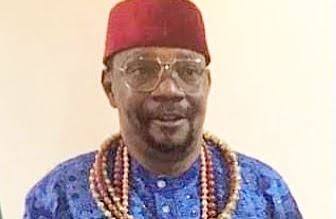
Concerned that Nigeria’s maritime industry is at a turning point, Captain (Chief) Anthony Onoharigho PhD, a seasoned industry personality has called for reforms to reposition the country as a global shipping hub.
In an interview with select industry journalists, the former Deputy Registrar of the Liberian Maritime Authority and Rector of Conarina Maritime Academy outlined a roadmap that combines open ship registry adoption with a decisive shift to Cost, Insurance, and Freight (CIF) contracts in crude oil exports.
Captain Onoharigho, who has decades of experience in ship registration and certification, criticized Nigeria’s current closed registry system, noting that the system is stifling growth. “One of the reasons why we don’t get Category B or C on the IMO whitelist is because our fleet level is very low. Bureaucratic bottlenecks make vessel registration take weeks, while countries like Liberia and Panama register ships within 24 hours,” he said.
He argued that adopting Liberia’s open registry model would not only enhance Nigeria’s global image but also generate continuous revenue through annual flag registration fees and create thousands of maritime jobs.
He described open registry as a tool for “image laundering”, which thus can be positioned to project Nigeria’s presence on the seas through vessels flying the national flag. Explaining other benefits derivable from open registry system, the maritime trainer said: “Every vessel registered under the Nigerian flag pays annual fees. That’s free money to the country. Combine that with cabotage enforcement, and you create jobs for Nigerian seafarers while expanding the fleet.”
Beyond registry reform, Onoharigho strongly advocated for Nigeria to abandon its reliance on Free on Board (FOB) contracts in crude oil exports, which he said deprive the nation of billions in freight and insurance revenues. “Under FOB, the buyer nominates the vessel and takes the insurance. Nigeria only collects money from the crude itself. We are losing money from insurance and freight,” he warned.
By contrast, CIF contracts would allow Nigeria to control freight and insurance, ensuring that revenues stay within the country. “If we run CIF, we collect the cost of crude oil, the insurance, and the freight. That’s a win-win situation. Iran did it with over 300 vessels, and Nigeria can too,” he said.
Captain Onoharigho urged the government to invest in crude oil tankers, noting that each vessel could employ dozens of Nigerian youths, reduce unemployment, and significantly raise the national GDP. “The maritime industry can engage so much youth that they will not even think of going into crime. If Nigeria combines open registry with cabotage enforcement, we will create jobs, boost GDP, and strengthen our global standing,” he added.
The titled Urhobo senior statesman also criticized the current practice of foreign portfolio brokers dominating crude oil lifting contracts, leaving Nigeria with minimal returns. “Right now, foreign brokers nominate vessels to Nigerian National Petroleum Corporation Limited (NNPCL), lift our crude, refine it abroad, and sell it back to us at higher prices. We are always losing,” he lamented.
For Captain Onoharigho, the solution is clear: open registry, CIF adoption, and strategic investment in crude oil tankers. He believes these measures will not only reposition Nigeria as a maritime powerhouse but also tackle unemployment and strengthen the economy.
“President Bola Tinubu’s government must encourage these reforms. The maritime industry can be the engine that drives youth employment and GDP growth.” he enthused.








Teamwork, Discipline, Central to Our Enforcement Mandate —Jonah Charges Customs Marine Operatives

How the UAE-Nigeria Partnership Can Transform Our Ports

Cross River, FTZ Customs Gets New Impulse

CGC Adeniyi Signs Anti-Corruption Documents, Activates ICRAM Steering Committee

Nigeria Customs Marks Breast Cancer Awareness Month in Abuja

NIMASA To Host Webinars on Automation of Nigerian Ship Registry

NPA Moves To Cut Export Bottlenecks, Targets Forex Inflows

NPA Congratulates ANLCA on 72nd Anniversary, Reaffirms Support for Port Modernisation

Afeni Lands at FOU Zone ‘A’ in Acting Controller Capacity

NPA Mulls Specialised Fishing Port to Deepen Nigeria’s Blue Economy

Industry Stakeholders Applaud ANLCA at 72nd Anniversary Celebration

Port Regulation Critical To Fisheries, Blue Economy – NPERA DG, Akutah
ANLCA Board is intact, cannot be wished away by anybody’-Elochukwu

B-R-E-A-K-I-N-G: Effedua, Rector MAN Oron, Resigns

EFCC’s Probe: Okowa Plots Sheriff’s Removal Despite London Accord
Customs Trains ANLCA Members, Others on B’Odogwu Portal

NPA’s Alleged Executive Management Fight: The Half Truth & Truth
ANLCA Board Election: Know Your Candidates
‘Why We Launched B-Odogwu Pilot Scheme With Webb Fontaine Still Running’ – Adeniyi

Onyemekara Promoted GM, Appointed NPA’s New Spokesperson

Nigeria Customs: Trust, Competence And The Oramalugo Factor

‘Rush To Break News Can Lead To Brush With Cybercrime’- Police

Kebbi Is Hub of Hard Drugs Smuggling In Northern Region’ – Oramalugo

Apapa Customs Collects ₦161b On B’Odogwu Platform In 3 Weeks